
SIEM & AI SOC
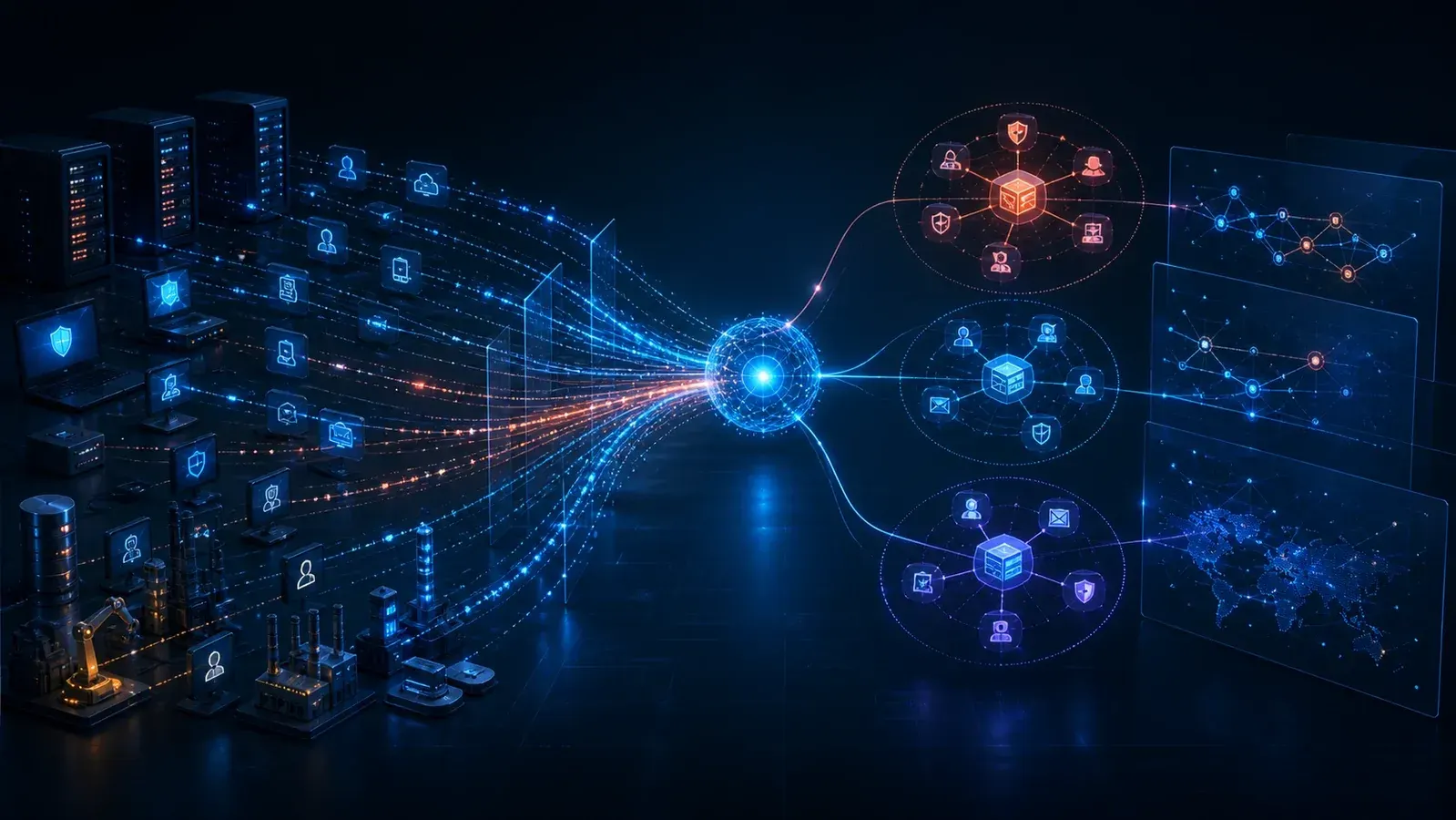
Transform security signals into investigation-ready, evidence-linked context.
Security teams receive large volumes of logs, alerts, vulnerability findings and infrastructure signals. A scanner finding is not automatically a confirmed vulnerability, an alert is not automatically an incident, and a model-generated explanation is not automatically an analyst decision.
NEURIXA SIEM & AI SOC is designed to connect technical events with asset, identity, service, risk and evidence context so authorised analysts can investigate more effectively.
From log volume to meaningful detection
The value of a SIEM is not measured only by the number of collected log lines. Events need reliable source identity, correct time handling, consistent representation and enough context to support a defensible assessment.
NEURIXA separates evidence collection, correlation and AI-assisted interpretation rather than treating them as one opaque operation.
How the capability works
Ingest and identify sources
Relevant events can be collected from registered and authorised sources. Source identity, collection method, time information and raw evidence remain important for later verification.
Normalise and enrich events
Different event formats can be represented consistently and enriched with asset, identity, vulnerability, service and business context.
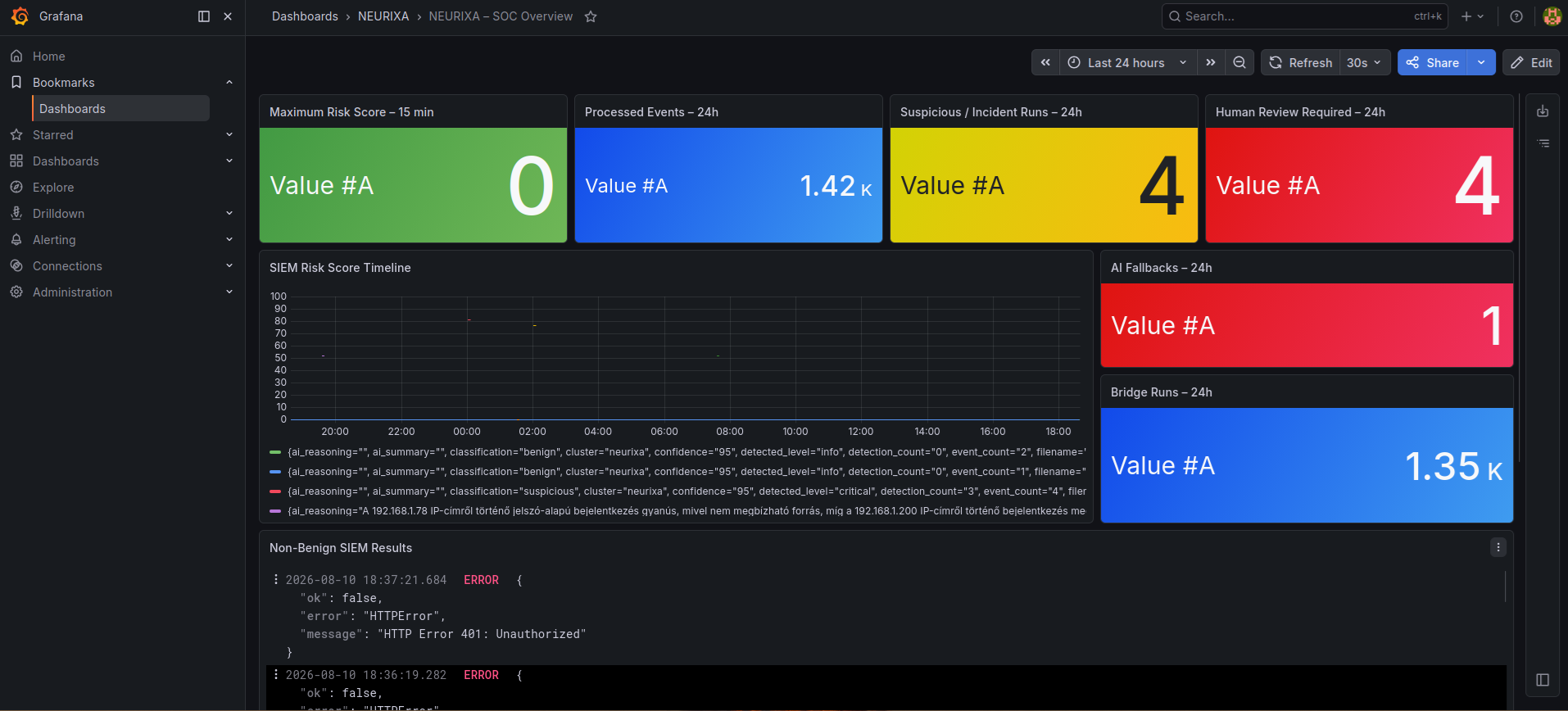
Actual NEURIXA SOC monitoring view shown with demonstration data.Correlate related activity
Individual signals can be linked across time and sources. The objective is to recognise meaningful patterns without losing the underlying evidence or confusing correlation with proof.
Support investigation
AI can help organise the available context, explain relationships and prepare an investigation summary. Analysts remain responsible for validation, severity assessment, incident classification and response.
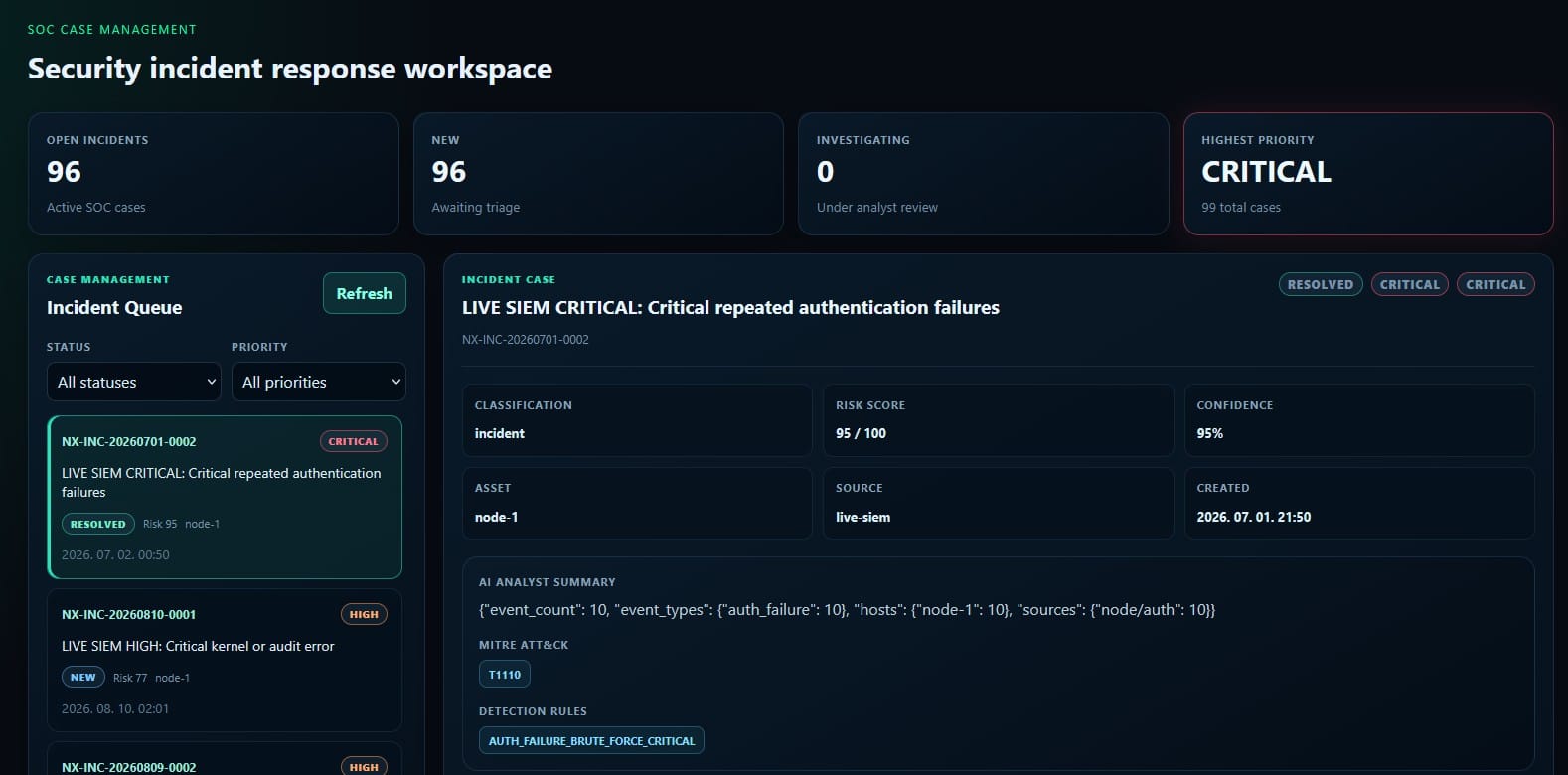
Actual NEURIXA incident investigation workspace shown with demonstration data.Example: compromised-account investigation
A sign-in anomaly may appear low priority on its own. Its significance changes if it is followed by unusual AI-service access, a policy violation and activity involving a critical system.
The SIEM can correlate the evidence using shared identity and time context. The AI SOC layer can organise the sequence and identify unanswered questions, while the analyst reviews original events and determines whether an incident exists.
Typical applications
- security-event normalisation and correlation;
- alert enrichment and investigation support;
- vulnerability prioritisation in asset and service context;
- IT and OT security evidence handling;
- incident timelines and analyst briefings;
- integration of Proxy evidence with wider security operations.
Designed to support analysts
NEURIXA does not treat AI confidence as proof. Missing logs, uncertain asset identity, time drift and conflicting evidence must remain visible. Automated recommendations do not replace authorised incident response or management accountability.